
Showing posts with label W. D. Hamilton. Show all posts
Showing posts with label W. D. Hamilton. Show all posts
Wednesday, February 22, 2012
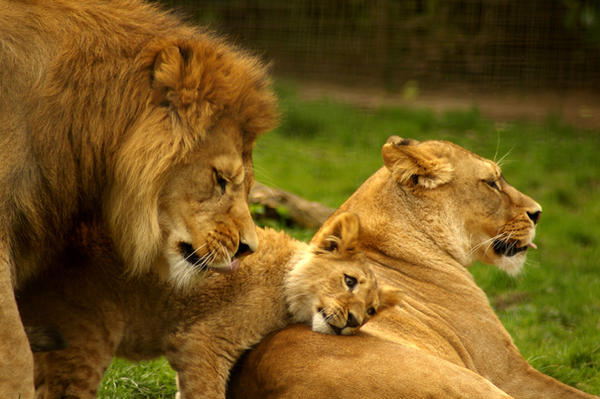
Question: What are the evolutionary implications of the fact that larger coalitions of male lions consist almost entirely of close relatives?
 In a lion pride there are usually only a few males (the coalition), between 1-4. They can be related or unrelated, but depending on how many there are will determine how beneficial living in the pride is for unrelated males. With a coalition of two males, it wouldn't matter whether you are related or not to the other male because studies have shown that both males tend to reproduce equally in these cases. Now, if there is a coalition of more than two males, only the two highest ranking males will do most of the mating, leaving the other males to contribute to the prides protection and hunting but without the benefits of spreading their genes. Thus unless you are kin to the other males in the coalition, you will not benefit your genes by wasting time helping this pride. Therefore we tend to see prides with more than two males being more related because although the other males might not mate as much, they are still helping their genes because they share half of there genes with the other males.

Tuesday, January 24, 2012
Geneamanship
The Selfish Gene: Chapter 6 summary
A gene is not a single entity, it is comprised as all replicas that reside in certain organisms. This chapter discusses how genes may be able to assist other replicas of the same gene that are within other survival machines. Although the may seem altruistic and "good for the species," it is purely out of a genes selfishness as we shall see.
It could be incredibly successful for a gene to be able to achieve its desired trait in addition to showing some physical aspect (such as a green beard) so that others having this gene could recognize each other and ensure the survival of the gene by helping one-another. But of coarse this is not particularly likely to occur. How else would a gene be able to recognize another bearer of the gene? One of the best ways to recognize the bearer of similar genes is ones relatedness to us, our kin. If one brother dies in order to save the life of 10 of his brothers, one copy of the "kin-altruism gene" would be lost but at the cost of saving possibly 10.
Here we are talking mainly about rare genes within a genepool. We can assume that a particular rare gene you might have would be much more likely to be within close kin as opposed to the rest of the population. To be exact, there is a 50 percent chance that your sister or brother would have the gene, as well as your children. The probability of a certain kin having a specific gene is called its relatedness and is calculated by identifying a common ancestor, then count the generation distance between them, and then multiply 0.5 by itself for each generation. The general equation is (1/2)to the power of g.
In order for an individual to expend the energy and time to help another, the benefit must out way the risk for that individual. "In order for altruistic behaviour to evolve, the net risk to the altruist must be less than the net benefit to the recipient multiplied by the relatedness." W. D. Hamilton devised this rule in 1964 that shows quantitatively how these are related.

 The chapter concludes with a discussion of some exceptions to this rule of probability and that an index of certainty many play a large role in these decisions. Evolution has provided many species increased ways to recognize specific relatives due to certain "cheaters" that take advantage of altruistic behavior and thus increase the need for individuals to become more keen on recognizing close kin. The example given is that of how birds "cheat" by placing their eggs in another nest for another bird to raise as their own, this is called brood parasitism. This would lead to a birds need to distinguish her eggs from everyone else's. For example, a mother might be much more certain who her son is because of the large amount of time they have spent with each other as opposed to a sister and brother, how are they for certain that they are related? This may help explain the increased parent/child relationship in comparison to brother/sister relationships. Dawkins also uses this to explain that parent/child altruism is not just a form of "group selection," but is actually kin selection.
The photo shows four bird species eggs (left egg) in comparison to the mimicked egg of a cuckoo (right egg).
A gene is not a single entity, it is comprised as all replicas that reside in certain organisms. This chapter discusses how genes may be able to assist other replicas of the same gene that are within other survival machines. Although the may seem altruistic and "good for the species," it is purely out of a genes selfishness as we shall see.
It could be incredibly successful for a gene to be able to achieve its desired trait in addition to showing some physical aspect (such as a green beard) so that others having this gene could recognize each other and ensure the survival of the gene by helping one-another. But of coarse this is not particularly likely to occur. How else would a gene be able to recognize another bearer of the gene? One of the best ways to recognize the bearer of similar genes is ones relatedness to us, our kin. If one brother dies in order to save the life of 10 of his brothers, one copy of the "kin-altruism gene" would be lost but at the cost of saving possibly 10.
Here we are talking mainly about rare genes within a genepool. We can assume that a particular rare gene you might have would be much more likely to be within close kin as opposed to the rest of the population. To be exact, there is a 50 percent chance that your sister or brother would have the gene, as well as your children. The probability of a certain kin having a specific gene is called its relatedness and is calculated by identifying a common ancestor, then count the generation distance between them, and then multiply 0.5 by itself for each generation. The general equation is (1/2)to the power of g.
In order for an individual to expend the energy and time to help another, the benefit must out way the risk for that individual. "In order for altruistic behaviour to evolve, the net risk to the altruist must be less than the net benefit to the recipient multiplied by the relatedness." W. D. Hamilton devised this rule in 1964 that shows quantitatively how these are related.

"C" is equal to the reproductive cost of the individual that is behaving altruistically.
Now, Dawkins is not saying that individual genes actually calculate these odds before deciding to help a relative or send out a call to others that there he has found food, "what really happens is that the gene pool becomes filled with genes that influence bodies in such a way that they behave as if they had made such calculations." In addition, the calculation is but a simple estimate of the many factors that play into these decisions.
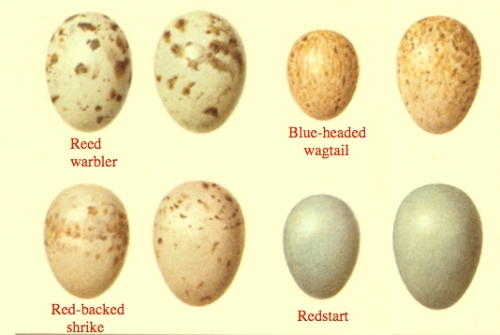 The chapter concludes with a discussion of some exceptions to this rule of probability and that an index of certainty many play a large role in these decisions. Evolution has provided many species increased ways to recognize specific relatives due to certain "cheaters" that take advantage of altruistic behavior and thus increase the need for individuals to become more keen on recognizing close kin. The example given is that of how birds "cheat" by placing their eggs in another nest for another bird to raise as their own, this is called brood parasitism. This would lead to a birds need to distinguish her eggs from everyone else's. For example, a mother might be much more certain who her son is because of the large amount of time they have spent with each other as opposed to a sister and brother, how are they for certain that they are related? This may help explain the increased parent/child relationship in comparison to brother/sister relationships. Dawkins also uses this to explain that parent/child altruism is not just a form of "group selection," but is actually kin selection.
The photo shows four bird species eggs (left egg) in comparison to the mimicked egg of a cuckoo (right egg).
Subscribe to:
Posts (Atom)