The Selfish Gene: Chapter 7 summary
This chapter focuses on reproduction, population numbers in specific groups of a species, and how evolution has played a role in controlling birth-rates. Individuals must balance between bringing new individuals into the world and caring for the ones already in it. Or, "child bearing vs. child caring," as Dawkins puts it. Using one is not evolutionarily stable as we saw in the previous chapter. By using the idea that individuals unconsciously choose to regulate their birth-rates "for the good of the species," Wynne-Edwards makes the claim for group-selection. In this chapter, Dawkins uses the selfish gene theory to explain these same phenomena.
Unlike humans, all other organisms lack the ability to foresee the devastating effects of overpopulation. Populations are controlled by their ecological limitations, large groups of individuals deplete resources which ultimately lead to starvation. But why don't we see this with all population? The Wynne-Edwards explanation would be that species work altruistically to artificially control birth-rates. As seen with species that control territories and fight for the right to mate, this explanation says that only certain individuals gain the right to mate, thus controlling birth-rates. It even goes on to explain that individuals conduct censuses of their population numbers to determine their birth-rate.
What the selfish gene theory tells us is that individuals are actually acting out of selfishness to preserve their genes even though this can look altruistic. There is a surprising number of "costs" that are associated with bearing children. Costs that will determine the proportion of children that will survive to carry on their parent's genes. It turns out that individuals do control their own birth rates, but not in the same sense as Wynne-Edwards understands it. There is an ideal number of children that would provide the lowest burden of care, protection, and weaning by the parents whilst having the greatest chance that genes would be preserved in the surviving children. Each species has a more or less specific brood size each breading season and this has been determined by the evolution of the species in its specific environment.
One experiment was seen to support the Wynne-Edwards idea of autistic group selection. It used mice living in a confined space with endless supplies of food and water in order to see how birth-rates were affected when the population filled the space. As the population grew, the birth-rate slowed down before filling the space, why was this? Wynne-Edwards would explain this as the mice controlling their numbers for the good of the group. The selfish gene theory concludes nearly the same, but that the mice would have no idea that the resources were endless and that "animals tend to have the optimum number of children from their own point of view." This would mean having less children in order to optimize their chance that the maximum amount of children would go on to preserve the parents genes.

Showing posts with label genes. Show all posts
Showing posts with label genes. Show all posts
Tuesday, January 31, 2012

Tuesday, January 24, 2012
Geneamanship
The Selfish Gene: Chapter 6 summary
A gene is not a single entity, it is comprised as all replicas that reside in certain organisms. This chapter discusses how genes may be able to assist other replicas of the same gene that are within other survival machines. Although the may seem altruistic and "good for the species," it is purely out of a genes selfishness as we shall see.
It could be incredibly successful for a gene to be able to achieve its desired trait in addition to showing some physical aspect (such as a green beard) so that others having this gene could recognize each other and ensure the survival of the gene by helping one-another. But of coarse this is not particularly likely to occur. How else would a gene be able to recognize another bearer of the gene? One of the best ways to recognize the bearer of similar genes is ones relatedness to us, our kin. If one brother dies in order to save the life of 10 of his brothers, one copy of the "kin-altruism gene" would be lost but at the cost of saving possibly 10.
Here we are talking mainly about rare genes within a genepool. We can assume that a particular rare gene you might have would be much more likely to be within close kin as opposed to the rest of the population. To be exact, there is a 50 percent chance that your sister or brother would have the gene, as well as your children. The probability of a certain kin having a specific gene is called its relatedness and is calculated by identifying a common ancestor, then count the generation distance between them, and then multiply 0.5 by itself for each generation. The general equation is (1/2)to the power of g.
In order for an individual to expend the energy and time to help another, the benefit must out way the risk for that individual. "In order for altruistic behaviour to evolve, the net risk to the altruist must be less than the net benefit to the recipient multiplied by the relatedness." W. D. Hamilton devised this rule in 1964 that shows quantitatively how these are related.

 The chapter concludes with a discussion of some exceptions to this rule of probability and that an index of certainty many play a large role in these decisions. Evolution has provided many species increased ways to recognize specific relatives due to certain "cheaters" that take advantage of altruistic behavior and thus increase the need for individuals to become more keen on recognizing close kin. The example given is that of how birds "cheat" by placing their eggs in another nest for another bird to raise as their own, this is called brood parasitism. This would lead to a birds need to distinguish her eggs from everyone else's. For example, a mother might be much more certain who her son is because of the large amount of time they have spent with each other as opposed to a sister and brother, how are they for certain that they are related? This may help explain the increased parent/child relationship in comparison to brother/sister relationships. Dawkins also uses this to explain that parent/child altruism is not just a form of "group selection," but is actually kin selection.
The photo shows four bird species eggs (left egg) in comparison to the mimicked egg of a cuckoo (right egg).
A gene is not a single entity, it is comprised as all replicas that reside in certain organisms. This chapter discusses how genes may be able to assist other replicas of the same gene that are within other survival machines. Although the may seem altruistic and "good for the species," it is purely out of a genes selfishness as we shall see.
It could be incredibly successful for a gene to be able to achieve its desired trait in addition to showing some physical aspect (such as a green beard) so that others having this gene could recognize each other and ensure the survival of the gene by helping one-another. But of coarse this is not particularly likely to occur. How else would a gene be able to recognize another bearer of the gene? One of the best ways to recognize the bearer of similar genes is ones relatedness to us, our kin. If one brother dies in order to save the life of 10 of his brothers, one copy of the "kin-altruism gene" would be lost but at the cost of saving possibly 10.
Here we are talking mainly about rare genes within a genepool. We can assume that a particular rare gene you might have would be much more likely to be within close kin as opposed to the rest of the population. To be exact, there is a 50 percent chance that your sister or brother would have the gene, as well as your children. The probability of a certain kin having a specific gene is called its relatedness and is calculated by identifying a common ancestor, then count the generation distance between them, and then multiply 0.5 by itself for each generation. The general equation is (1/2)to the power of g.
In order for an individual to expend the energy and time to help another, the benefit must out way the risk for that individual. "In order for altruistic behaviour to evolve, the net risk to the altruist must be less than the net benefit to the recipient multiplied by the relatedness." W. D. Hamilton devised this rule in 1964 that shows quantitatively how these are related.

"C" is equal to the reproductive cost of the individual that is behaving altruistically.
Now, Dawkins is not saying that individual genes actually calculate these odds before deciding to help a relative or send out a call to others that there he has found food, "what really happens is that the gene pool becomes filled with genes that influence bodies in such a way that they behave as if they had made such calculations." In addition, the calculation is but a simple estimate of the many factors that play into these decisions.
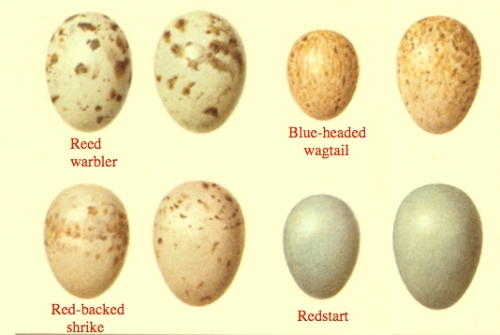 The chapter concludes with a discussion of some exceptions to this rule of probability and that an index of certainty many play a large role in these decisions. Evolution has provided many species increased ways to recognize specific relatives due to certain "cheaters" that take advantage of altruistic behavior and thus increase the need for individuals to become more keen on recognizing close kin. The example given is that of how birds "cheat" by placing their eggs in another nest for another bird to raise as their own, this is called brood parasitism. This would lead to a birds need to distinguish her eggs from everyone else's. For example, a mother might be much more certain who her son is because of the large amount of time they have spent with each other as opposed to a sister and brother, how are they for certain that they are related? This may help explain the increased parent/child relationship in comparison to brother/sister relationships. Dawkins also uses this to explain that parent/child altruism is not just a form of "group selection," but is actually kin selection.
The photo shows four bird species eggs (left egg) in comparison to the mimicked egg of a cuckoo (right egg).
Monday, January 9, 2012
The Gene Machine
The Selfish Gene: Chapter 4 summary
In this chapter the discussion is focused on the behavior of living organisms. How genes are the blueprints or outline that a specific body (whole organism) is developed from in order to ensure the continued existence of each gene. Successful life ultimately is determined by how that body interacts with its environment and how well its genes prepared it for this environment, mentally and physically.
As our survival machines battle it out for the ever diminishing organic molecules in early earth's primeval soup, a branch that would later become plants broke away and thrived in its ability to utilize solar energy to convert simpler molecules into more complex ones that could be metabolized. This increased complexity continued with the evolution of further sub-branches of both photosynthetic and other survival machines. Then comes about colonies of these survival machines (or by this point, cells) that work in unison to achieve a common goal of each gene, to survive and reproduce. "Selection has favored genes that cooperate with others." At this point on Dawkins notes, altruistic behaviour and selfish behaviour are meant in terms of "one animal body toward another."
Behaviour is defined here as: "the trick of rapid movement which has been largely exploited by the animal branch of survival machines." Animals use muscles working against bones and joints to produce tension and thus movement. But what causes this movement to occur? Or more importantly for us, how does rapid information tell muscles to move and ultimately protect or assist the genes continue existence without direct control from the genes themselves? Natural selection has in-turn favored those with sensory nerves, which would later evolve into very complex organs. This pulse of information is sent from the outside environment both directly to the muscle. Now, in order to be achieve more complex interaction with our environment, the evolution of collection of neurons that would become a brain allowed for the storing of memories. Behaviour could be influenced by not only the precent, but also the distant past. What's important here is that all living organisms act with an apparent purposiveness, that if we see others in the act of "searching for food, or a mate, or for a lost child, we can hardly help imputing to it some of the subjective feelings we ourselves experience when we search." "This purposiveness has evolved the property we call 'consciousness'." It is easy to program a computer to have certain goals or aims, but are they actually conscious? He leaves this question open for the reader and returns to his explanation.
Here Dawkins uses the analogy of a computer playing chess. Now, it would be impossible to fill a computer up with all of the possible moves in chess and which ones to use in all situation. As with our genes, there isn't a specific gene for each situation we could possible come across in our lives. Computers are given a set of basic rules to follow, or goals to aim for, "all the programmer can do is to set the computer up beforehand in the best way possible, with a proper balance between lists of specific knowledge, and hints about strategies and techniques."
As with computers, our brains have the ability to simulate a variety of possible situations that could happen in the future, near or far. This is a powerful tool for survival because it allows us to surpass trail and error. Our mental compactly has yet again given us a way of protecting our genes. "Perhaps consciousness arises when the brain's simulation of the world becomes so complete that it must include a model of itself."
In this chapter the discussion is focused on the behavior of living organisms. How genes are the blueprints or outline that a specific body (whole organism) is developed from in order to ensure the continued existence of each gene. Successful life ultimately is determined by how that body interacts with its environment and how well its genes prepared it for this environment, mentally and physically.
***
As our survival machines battle it out for the ever diminishing organic molecules in early earth's primeval soup, a branch that would later become plants broke away and thrived in its ability to utilize solar energy to convert simpler molecules into more complex ones that could be metabolized. This increased complexity continued with the evolution of further sub-branches of both photosynthetic and other survival machines. Then comes about colonies of these survival machines (or by this point, cells) that work in unison to achieve a common goal of each gene, to survive and reproduce. "Selection has favored genes that cooperate with others." At this point on Dawkins notes, altruistic behaviour and selfish behaviour are meant in terms of "one animal body toward another."
Behaviour is defined here as: "the trick of rapid movement which has been largely exploited by the animal branch of survival machines." Animals use muscles working against bones and joints to produce tension and thus movement. But what causes this movement to occur? Or more importantly for us, how does rapid information tell muscles to move and ultimately protect or assist the genes continue existence without direct control from the genes themselves? Natural selection has in-turn favored those with sensory nerves, which would later evolve into very complex organs. This pulse of information is sent from the outside environment both directly to the muscle. Now, in order to be achieve more complex interaction with our environment, the evolution of collection of neurons that would become a brain allowed for the storing of memories. Behaviour could be influenced by not only the precent, but also the distant past. What's important here is that all living organisms act with an apparent purposiveness, that if we see others in the act of "searching for food, or a mate, or for a lost child, we can hardly help imputing to it some of the subjective feelings we ourselves experience when we search." "This purposiveness has evolved the property we call 'consciousness'." It is easy to program a computer to have certain goals or aims, but are they actually conscious? He leaves this question open for the reader and returns to his explanation.
Here Dawkins uses the analogy of a computer playing chess. Now, it would be impossible to fill a computer up with all of the possible moves in chess and which ones to use in all situation. As with our genes, there isn't a specific gene for each situation we could possible come across in our lives. Computers are given a set of basic rules to follow, or goals to aim for, "all the programmer can do is to set the computer up beforehand in the best way possible, with a proper balance between lists of specific knowledge, and hints about strategies and techniques."
As with computers, our brains have the ability to simulate a variety of possible situations that could happen in the future, near or far. This is a powerful tool for survival because it allows us to surpass trail and error. Our mental compactly has yet again given us a way of protecting our genes. "Perhaps consciousness arises when the brain's simulation of the world becomes so complete that it must include a model of itself."
***
"What has all this to do with altruism and selfishness? I am trying to build up the idea that animal behaviour, altruistic or selfish, is under the control of genes in only an indirect, but still very powerful, sense."
Subscribe to:
Posts (Atom)