Tuesday, January 24, 2012

Geneamanship

The Selfish Gene: Chapter 6 summary

    A gene is not a single entity, it is comprised as all replicas that reside in certain organisms. This chapter discusses how genes may be able to assist other replicas of the same gene that are within other survival machines. Although the may seem altruistic and "good for the species," it is purely out of a genes selfishness as we shall see.
   It could be incredibly successful for a gene to be able to achieve its desired trait in addition to showing some physical aspect (such as a green beard) so that others having this gene could recognize each other and ensure the survival of the gene by helping one-another. But of coarse this is not particularly likely to occur. How else would a gene be able to recognize another bearer of the gene? One of the best ways to recognize the bearer of similar genes is ones relatedness to us, our kin. If one brother dies in order to save the life of 10 of his brothers, one copy of the "kin-altruism gene" would be lost but at the cost of saving possibly 10.
    Here we are talking mainly about rare genes within a genepool. We can assume that a particular rare gene you might have would be much more likely to be within close kin as opposed to the rest of the population. To be exact, there is a 50 percent chance that your sister or brother would have the gene, as well as your children. The probability of a certain kin having a specific gene is called its relatedness and is calculated by identifying a common ancestor, then count the generation distance between them, and then multiply 0.5 by itself for each generation. The general equation is (1/2)to the power of g.
    In order for an individual to expend the energy and time to help another, the benefit must out way the risk for that individual. "In order for altruistic behaviour to evolve, the net risk to the altruist must be less than the net benefit to the recipient multiplied by the relatedness." W. D. Hamilton devised this rule in 1964 that shows quantitatively how these are related.


"C" is equal to the reproductive cost of the individual that is behaving altruistically. 
    Now, Dawkins is not saying that individual genes actually calculate these odds before deciding to help a relative or send out a call to others that there he has found food, "what really happens is that the gene pool becomes filled with genes that influence bodies in such a way that they behave as if they had made such calculations." In addition, the calculation is but a simple estimate of the many factors that play into these decisions. 
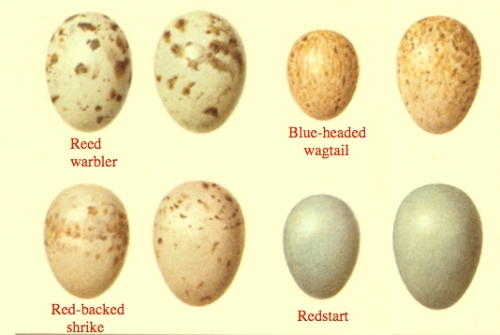
    The chapter concludes with a discussion of some exceptions to this rule of probability and that an index of certainty many play a large role in these decisions. Evolution has provided many species increased ways to recognize specific relatives due to certain "cheaters" that take advantage of altruistic behavior and thus increase the need for individuals to become more keen on recognizing close kin. The example given is that of how birds "cheat" by placing their eggs in another nest for another bird to raise as their own, this is called brood parasitism. This would lead to a birds need to distinguish her eggs from everyone else's. For example, a mother might be much more certain who her son is because of the large amount of time they have spent with each other as opposed to a sister and brother, how are they for certain that they are related? This may help explain the increased parent/child relationship in comparison to brother/sister relationships. Dawkins also uses this to explain that parent/child altruism is not just a form of "group selection," but is actually kin selection.

    The photo shows four bird species eggs (left egg) in comparison to the mimicked egg of a cuckoo (right egg).


Monday, January 16, 2012

Aggression: stability and the selfish machine

The Selfish Gene: Chapter 5 summary

"I have a hunch that we may come to look back on the invention of the ESS concept as one of the most important advances in evolutionary theory since Darwin."

    Intra species interactions between individuals in a population tend to occur more often then those with other species.  This is because they live almost identical lives, half the population are potential mates, and they compete for all the same resources. This chapter is about agression, it discusses the complex reasons why a particular individual might be better off not killing one of its own species to get a leg up in the short term. Without using excessive mathematics, Dawkins introduces how Game Theory can be used to better understand the cost-benefit relationship with aggression between organisms.
    The concept of evolutionarily stable strategy (ESS) is defined as "a strategy which, if most members of a population adopt it, cannot be bettered by an alternative strategy."Now in his first example, he discusses how two fighting strategies (hawk and dove) within a population would become genetically stable in a specific (7:5) ratio. Although having the entire population solely using the dove strategy would be much more productive, unconscious gene machines do not have foresight in the long term and thus using a single strategy would be very easy to exploit by one individual.

http://www.dayofthenewdan.com/

Dawkins then adds a conditional strategist called the retaliator that acts in response to what he is matched up with. He also adds a bully to the mix that acts like a hawk in all situations until someone fights back as well as a prober-retaliator which acts basically like the retaliator but tends to escalate the fight as a hawk. In a mixed population of all of these individuals we would find that retaliator would prove the most stable strategy, with prober-retaliator not far behind. Smaller proportions of each other type would then oscillate in the population. These types do not have to be seen as distinct polymorphisms but as a combined mix of all in each individual. 
    What is usually misconceived here is that group selection would drive the alleles of the most productive strategy to spread across the population thus increasing the population. Unfortunately ESS shows us that the most productive strategy might not be completely stable. 
    We then move on to an explanation of the war of attrition and how one's knowing another's strategy is unstable and is easily exploited by a mutant. Then comes along the poker face, we have a general average price that one should pay (fight, stand-ground for) but each individual has no idea what another will pay. The poker face is stable in this way. 
    Now, how does asymmetrical contests mont up with ESS? One example is a resident vs. an intruder. On one side, if intruded, fight back and on the other, if intruded, retreat. In this case, it depends on who gets to the majority first, after that deviations are penalized. In reality, we see that a territorial defense of a resident is naturally the ESS for many reasons. 
     
Yale University video on: Game theory and evolutionary stability: cooperation, mutation, and equilibrium

Friday, January 13, 2012

The lizard brain

    As I was reading Seth Godin's Linchpin today, chapter seven's discussion on what he calls "the resistance" brought to mind Dawkins selfish gene. Godin makes the argument that what makes it hard for an individual to become an "artist" (as he defines one) or someone who takes on challenge, and develops new ideas is actually biological. What he calls "the lizard brain," which he is actually referring to our limbic system, is what controls our basic functions for survival such as fear, anger, sex, and revenge. He makes an interesting argument about how the resistance is in constant battle in our daily lives to help keep us safe from making dangerous choices that might lower our chance of job security or our standard of living for example.
    What I found to be interesting is how this idea can be tied loosely with some of what is argued by Dawkins in The Selfish Gene. Evolutionarily speaking, our more basic brain functions had come along to combat a fiercely competitive environment of predators and prey. An animals best chance for survival would depend on its alertness and its quickness of reaction, "the lizard brain only wants to eat and be safe." If an organism were to take increased chances in daily life, thus too would its chances to fail increase. For Dawkins (and for evolutionary biologist for that matter), the goal is to stay alive and reproduce in order to pass on one's genes. Our genes have evolved the basics of what makes a brain useful and competitive, it allows an organism to react most effectively to its environment.
    What Godin is trying to get at though, is that humans in modern societies need to recognize that the limbic system remains a strong force in our lives. It tells us to stay safe and do what we're told, to stay as average as possible to ensure a safe life. Our role as a "linchpin" is to know when it has control over us and our creativity so that we can be unbounded in our art.

Wednesday, January 11, 2012

Solar Electricity Basics by Dan Chiras

    This just came in yesterday at the U bookstore and I picked it up with my leftover rebate from last year. While I'm not excited to add a third book to my list of things to read, I'm really looking forward to building a few small modules for my parents house once I get some money together. As the title says, it will give me a good basic overview of how to set up a small home system. When I make it to the point of actually building something, I plan on writing multiple step-by-step posts as I progress so that anyone looking to add just a few panels to a house could benefit as well.
    I just finished the second chapter, which covered basics of solar radiation such as irradiance vs. irradiation, how peak sun hours are calculated throughout the surface of earth, and methods of obtaining the most efficient system using this information.
    The introduction chapter simply discussed the pros and cons of solar electricity and how rapidly growing the industry is becoming due to the increased cost of fossil fuels and the need for clean renewable energy in a time of major climate change.

***

An article in 2005 discusses how conservative groups in Texas lobbied against a environmental science text book that Dan Chiras had written, claiming it to be "anti-free enterprise, anti-Christian, and anti-American.Here is a link to the Columbia Missourian article

Monday, January 9, 2012

The Gene Machine

The Selfish Gene: Chapter 4 summary

In this chapter the discussion is focused on the behavior of living organisms. How genes are the blueprints or outline that a specific body (whole organism) is developed from in order to ensure the continued existence of each gene. Successful life ultimately is determined by how that body interacts with its environment and how well its genes prepared it for this environment, mentally and physically.

***

As our survival machines battle it out for the ever diminishing organic molecules in early earth's primeval soup, a branch that would later become plants broke away and thrived in its ability to utilize solar energy to convert simpler molecules into more complex ones that could be metabolized. This increased complexity continued with the evolution of further sub-branches of both photosynthetic and other survival machines. Then comes about colonies of these survival machines (or by this point, cells) that work in unison to achieve a common goal of each gene, to survive and reproduce. "Selection has favored genes that cooperate with others." At this point on Dawkins notes, altruistic behaviour and selfish behaviour are meant in terms of "one animal body toward another."
Behaviour is defined here as: "the trick of rapid movement which has been largely exploited by the animal branch of survival machines." Animals use muscles working against bones and joints to produce tension and thus movement. But what causes this movement to occur? Or more importantly for us, how does rapid information tell muscles to move and ultimately protect or assist the genes continue existence without direct control from the genes themselves? Natural selection has in-turn favored those with sensory nerves, which would later evolve into very complex organs. This pulse of information is sent from the outside environment both directly to the muscle. Now, in order to be achieve more complex interaction with our environment, the evolution of collection of neurons that would become a brain allowed for the storing of memories. Behaviour could be influenced by not only the precent, but also the distant past. What's important here is that all living organisms act with an apparent purposiveness, that if we see others in the act of "searching for food, or a mate, or for a lost child, we can hardly help imputing to it some of the subjective feelings we ourselves experience when we search." "This purposiveness has evolved the property we call 'consciousness'." It is easy to program a computer to have certain goals or aims, but are they actually conscious? He leaves this question open for the reader and returns to his explanation.
Here Dawkins uses the analogy of a computer playing chess. Now, it would be impossible to fill a computer up with all of the possible moves in chess and which ones to use in all situation. As with our genes, there isn't a specific gene for each situation we could possible come across in our lives. Computers are given a set of basic rules to follow, or goals to aim for, "all the programmer can do is to set the computer up beforehand in the best way possible, with a proper balance between lists of specific knowledge, and hints about strategies and techniques."
As with computers, our brains have the ability to simulate a variety of possible situations that could happen in the future, near or far. This is a powerful tool for survival because it allows us to surpass trail and error. Our mental compactly has yet again given us a way of protecting our genes. "Perhaps consciousness arises when the brain's simulation of the world becomes so complete that it must include a model of itself."

***

"What has all this to do with altruism and selfishness? I am trying to build up the idea that animal behaviour, altruistic or selfish, is under the control of genes in only an indirect, but still very powerful, sense." 

Wednesday, December 28, 2011

Immortal Coils

The Selfish Gene: Chapter 3 summary

DNA, or any other DNA-like molecule that replicated itself at the dawn of life might not have been the first replicator molecule. Dawkins makes mention of A. G. Cairns-Smith's suggestion "that our ancestors, the first replicators, may have been not organic molecules at all, but inorganic crystals-minerals, little bits of clay." This may well be true but the DNA molecule is the clear victor of the replicators, it persists through every living organism (or "survival machines") on earth.

As shown above, the DNA molecule consists of 4 nucleotide bases in a long chain double helix. Every single cell in our body contains a complete copy of our genetic information with the acception of cells that go through meiosis and only contain half (23 chromosomes) of our original 46 chromosomes. This simple four-letter alphabet indirectly controls the manufacture of our body and more importantly, it's a one way path, any wisdom, skills, or knowledge learned in you life will never be translated back to genetic code. This is important to note because it means that genes are then responsible (at least in part) for their own survival in their efficiency of what survival mechanism (body) they create. Now, one might think it would be better to describe the "replicator" that controls this symphony of creation as a single large genetic unit, or genetic complex. This would be fine if it wasn't for sexual reproduction and the crossing over of two genetic pairs that make up a random collection of genes from both parents during meiosis. Each body is only momentary storage space for a short-lived collection of genes. Although our bodies (and their specific collection of genes) my only life for a century, the individual gene may continue for millions of years.
Dawknis goes on to explain in greater detail how meiosis provides us a random assortment of genes from our grandparents and how a single "gene" doesn't have a specific definition. He defines it as "any portion of chromosomal material that potentially lasts for enough generations to serve as a unit of natural selection." If a single genetic unit can replicate with high copying-fidelity, it will persist within a population, or in many species for many generations and we can call that a gene.
The "potential" for a gene to live for hundreds of millions of years make it a good candidate as a unit of natural selection. Some genes don't make it past one generation though when others continue on. This is partly luck but mostly that these particular genes are proven good at making survival machines. Any gene that aids in someway to the survival of the machine will increase the chances of survival and reproduction of that individual. In this case, it would only make sense to conclude from this that it would be detrimental to a genes survival for it to act altruistically. "The gene is the basic unit of selfishness."
In order for an organism to develop its body though, many genes need to work in unison to accomplish a single task such as building a leg. There is no specific gene that builds a leg, a number of genes and the external environmental factors end up determining the end result of say the length of one's legs. The exception is that their may be a specific gene that, with everything else constant, will increase the length of the leg.
This may seem paradoxical when compared with the earlier assumption that each gene is selfish and competing for its survival. Dawkins explains that this isn't the case because one of the good qualities of a gene would be to work together with others in addition to being good at whatever the gene is meant for. The ultimate quality of a gene is determined by other genes, its ability to cooperate with everyone else.